
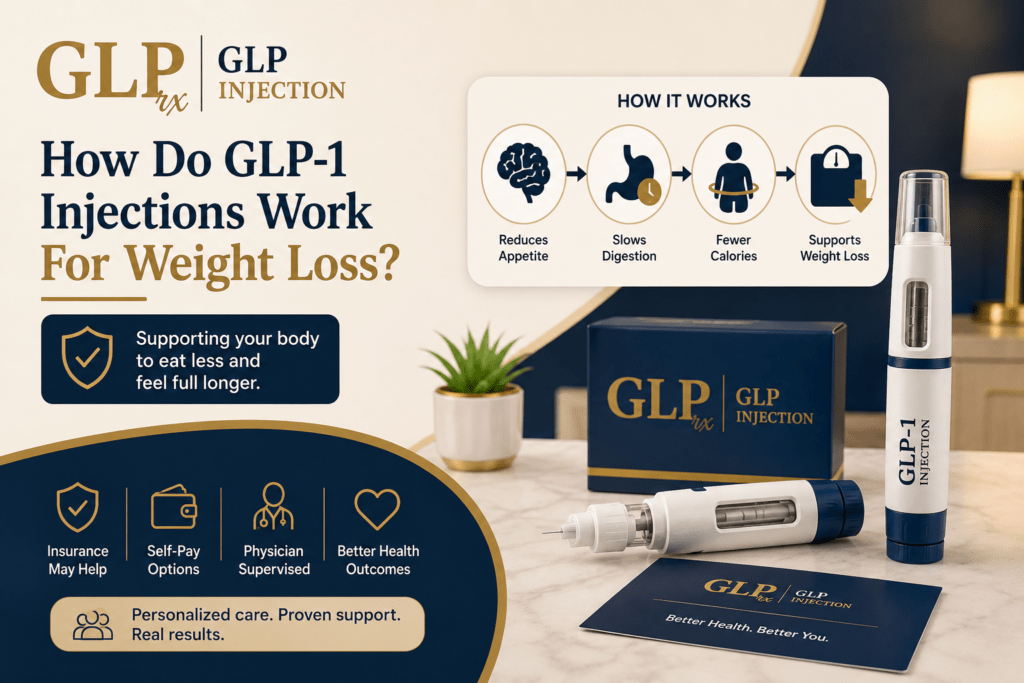
If you have been researching GLP-1 injections for weight loss you have probably seen people talk about appetite control, feeling full sooner, & eating less. But how does a medication actually create those effects?
GLP-1-based medications work by activating GLP-1 receptors involved in appetite regulation, food intake, blood sugar control, and digestion. Some medications, such as tirzepatide, also activate the GIP receptor.
The result is not simply that the medication “burns fat.” Instead, GLP-1 medications can change several signals involved in eating and energy balance, making it easier for some people to follow a reduced-calorie eating plan and lose weight.
How Do GLP-1 Injections Help You Lose Weight?
GLP-1 injections can support weight loss primarily by reducing appetite and calorie intake. They activate hormone receptors involved in appetite regulation and can also delay gastric emptying, which may contribute to feelings of fullness.
Different medications work somewhat differently, Semaglutide is a GLP-1 receptor agonist, while tirzepatide activates both GLP-1 and GIP receptors. Both can influence appetite and food intake.
Weight-loss medication is generally used alongside healthy eating and physical activity rather than as a replacement for either one.
What Is GLP-1?
GLP-1 stands for glucagon-like peptide-1. It is a naturally occurring hormone released mainly by cells in the intestine after you eat and plays a role in appetite, insulin secretion, glucagon regulation, and digestion.
One of its roles is helping the body respond to food. GLP-1 signaling is involved in appetite, insulin secretion, glucagon regulation, and digestion.
Scientists developed medications that mimic or activate these hormone pathways. Some of these medications are now used to treat type 2 diabetes, while others have specific FDA-approved indications for chronic weight management.
The important point is that GLP-1 medication does not introduce an entirely foreign process into the body. It works through hormone pathways that already play a role in regulating eating and metabolism.
How Do GLP-1 Injections Affect Appetite?
One of the most noticeable effects for many patients is a change in hunger.
GLP-1-based medications can act on areas involved in appetite regulation, helping reduce the drive to eat. NIDDK notes that medications such as liraglutide and semaglutide mimic GLP-1 and target areas of the brain involved in appetite and food intake.
This may change how you experience food.
You might notice that:
- You feel hungry less often
- Smaller portions feel more satisfying
- You think about food less frequently
- You feel full sooner during a meal
- It becomes easier to avoid unnecessary snacking
These changes can make a meaningful difference because long-term weight loss depends partly on maintaining a calorie intake that supports gradual weight reduction.
The medication does not remove the need for healthy food choices. Instead, appetite control may make those choices easier to maintain.
Do GLP-1 Injections Slow Digestion?
Yes. Some GLP-1-based medications delay gastric emptying, meaning food can move from the stomach into the small intestine more slowly.
Semaglutide and tirzepatide both have documented effects on gastric emptying. For tirzepatide, the effect is strongest after the first dose and becomes less pronounced over time.
Slower gastric emptying can contribute to a longer-lasting feeling of fullness.
This is one reason some people may find that they are comfortable eating smaller meals while using a GLP-1 medication.
However, slower gastric emptying can also contribute to digestive side effects such as nausea, vomiting, diarrhea, or constipation. The specific side effects and their severity vary between medications and individuals.
How Do GLP-1 Medications Change Calorie Intake?
GLP-1 medications do not need to dramatically increase the number of calories your body burns to produce weight loss.
A major part of their effect is helping reduce calorie intake.
When appetite decreases and meals become smaller, total daily calorie consumption may also decrease. FDA prescribing information for semaglutide and tirzepatide describes decreased calorie intake as an important part of their weight-loss effect.
Over time, consistently consuming fewer calories than your body uses can lead to weight loss.
This is different from saying that the medication simply “melts fat.” The process is more accurately understood as a combination of appetite regulation, reduced food intake, hormonal signaling, and changes in energy balance.
How Does Tirzepatide Work Differently From Semaglutide?
Not every GLP-1 injection works through exactly the same pathway.
Semaglutide activates the GLP-1 receptor.
Tirzepatide activates both the GLP-1 and GIP receptors. GIP stands for glucose-dependent insulinotropic polypeptide.
Because tirzepatide acts on two incretin pathways, it is often described as a dual GIP/GLP-1 receptor agonist.
The FDA states that tirzepatide reduces appetite and food intake and affects hormone pathways involved in blood glucose regulation.
This difference does not mean one medication is automatically better for every person. Treatment decisions should consider your medical history, other medications, potential side effects, treatment goals, and your healthcare professional’s assessment.
Do GLP-1 Injections Burn Fat Directly?
Their weight-loss effects are strongly associated with reduced calorie intake and appetite regulation, along with other effects on metabolic and hormonal pathways.
Think of the process this way:
GLP-1 medication → less appetite → lower food intake → sustained calorie deficit → weight loss
That simplified pathway explains the main idea, although the body’s actual regulation of weight involves many biological systems.
Why Does Weight Loss Take Time With GLP-1 Injections?
GLP-1 treatment is generally not designed to produce all of its effects immediately.
Treatment plans may start with a lower dose and increase gradually depending on the medication and the patient’s response. This approach can help healthcare professionals manage tolerability and determine an appropriate maintenance dose.
Your weight may also fluctuate from week to week because of changes in hydration, food intake, activity, digestion, and other factors.
For that reason, looking only at the scale after a few days does not provide a reliable picture of whether treatment is working.
A better approach is to monitor progress over time with your healthcare professional.
How Much Weight Can You Lose With GLP-1 Injections?
There is no single amount of weight that everyone will lose.
Results can vary based on:
- The medication used
- Dose and treatment duration
- Starting body weight
- Eating habits
- Physical activity
- Other health conditions
- Other medications
- Individual response to treatment
Clinical research has shown substantial average weight loss with some prescription medications used for chronic weight management. NIDDK notes that, when combined with lifestyle changes, prescription weight-management medications can help some people lose significantly more weight than lifestyle treatment alone.
However, clinical trial averages are not personal guarantees.
Someone else’s result should not be used as a prediction of how much weight you will lose.
Do You Still Need Diet and Exercise?
Yes.
GLP-1 medication is not intended to replace healthy eating or physical activity.
NIDDK states that weight-management medications work best when combined with a lifestyle program.
A sustainable approach may include:
- Eating nutrient-dense foods
- Getting adequate protein and fiber
- Managing portion sizes
- Drinking enough fluids
- Staying physically active
- Getting adequate sleep
- Following your healthcare professional’s recommendations
The medication can make appetite management easier, but your daily habits still matter for both weight loss and long-term health.
What Happens When You Stop GLP-1 Injections?
Another important question is what happens after treatment ends.
Weight management is not only about reaching a lower number on the scale. Maintaining that change can also be challenging because the body’s appetite and energy-regulation systems continue to influence weight.
NIDDK notes that people will probably regain some weight after stopping weight-management medication, although healthy eating habits and physical activity may help limit weight regain.
That is why stopping or changing a prescription should be discussed with your healthcare professional rather than done independently.
Are GLP-1 Injections Safe for Everyone?
No. GLP-1 medications are prescription treatments and are not appropriate for everyone.
Your healthcare professional may consider:
- Your current health conditions
- Previous medical history
- Other prescription medications
- Allergies
- Pregnancy or plans for pregnancy
- Your weight-management goals
- Potential medication interactions
- Possible side effects
Common gastrointestinal side effects can occur with GLP-1-based medications, although the specific safety profile depends on the medication.
For example, FDA-approved prescribing information contains important warnings and contraindications that should be reviewed before treatment.
Never start, stop, or change the dose of a prescription weight-loss medication without appropriate medical guidance.
Who May Be a Candidate for GLP-1 Weight-Loss Medication?
Prescription weight-management medication is not intended for everyone who wants to lose a few pounds.
Healthcare professionals may consider medication for adults with obesity or for adults who are overweight and have certain weight-related health conditions. NIDDK notes that BMI and other health factors can be part of the assessment.
Your healthcare professional will consider your overall situation rather than relying on weight alone.
This is important because effective weight management should address your health, not just your appearance.
Frequently Asked Questions About How GLP-1 Injections Work
How quickly do GLP-1 injections start working?
Some people notice changes in appetite relatively early, but the amount of weight lost varies. Treatment often involves gradual dose adjustments, so results should be evaluated over time rather than after only a few doses.
Do GLP-1 injections make you feel full?
They can. By affecting appetite signaling and, for some medications, slowing gastric emptying, GLP-1-based treatments may increase feelings of fullness and reduce hunger.
Do GLP-1 injections reduce hunger?
Yes. Appetite reduction is one of the major ways these medications support weight loss.
Do GLP-1 injections speed up metabolism?
That is not the best way to describe how they work. Their primary weight-loss effects involve appetite regulation and reduced calorie intake rather than simply increasing metabolic rate.
Can you lose weight without changing your diet?
Medication can help reduce appetite and calorie intake, but GLP-1 treatment works best as part of a broader weight-management plan that includes healthy eating and physical activity.
Is semaglutide the same as tirzepatide?
No. Semaglutide primarily activates the GLP-1 receptor, while tirzepatide activates both GIP and GLP-1 receptors. They are different medications with different prescribing information.
How long do you need to take GLP-1 medication?
There is no universal treatment duration. Your healthcare professional may recommend continuing treatment while you are benefiting from it and not experiencing unacceptable side effects.
The Bottom Line
GLP-1 injections support weight loss mainly by helping regulate appetite and reduce calorie intake. They can also affect digestion and blood-sugar-related hormone pathways, depending on the medication.
Semaglutide works through the GLP-1 receptor, while tirzepatide acts on both GLP-1 and GIP receptors. These medications can help some people feel less hungry, become satisfied with smaller meals, and maintain a reduced-calorie eating pattern.
But GLP-1 treatment is not a shortcut or a replacement for healthy habits. The best results come from combining medically appropriate treatment with nutrition, physical activity, and ongoing professional guidance.
If you are considering GLP-1 injections for weight loss, speak with a qualified healthcare professional who can review your health history and determine whether treatment is appropriate for you.
This article is for educational purposes only and is not medical advice, diagnosis, or treatment. GLP-1 medications are prescription medicines and may not be appropriate for everyone. Always consult a qualified healthcare professional before starting, stopping, or changing a prescription medication.