
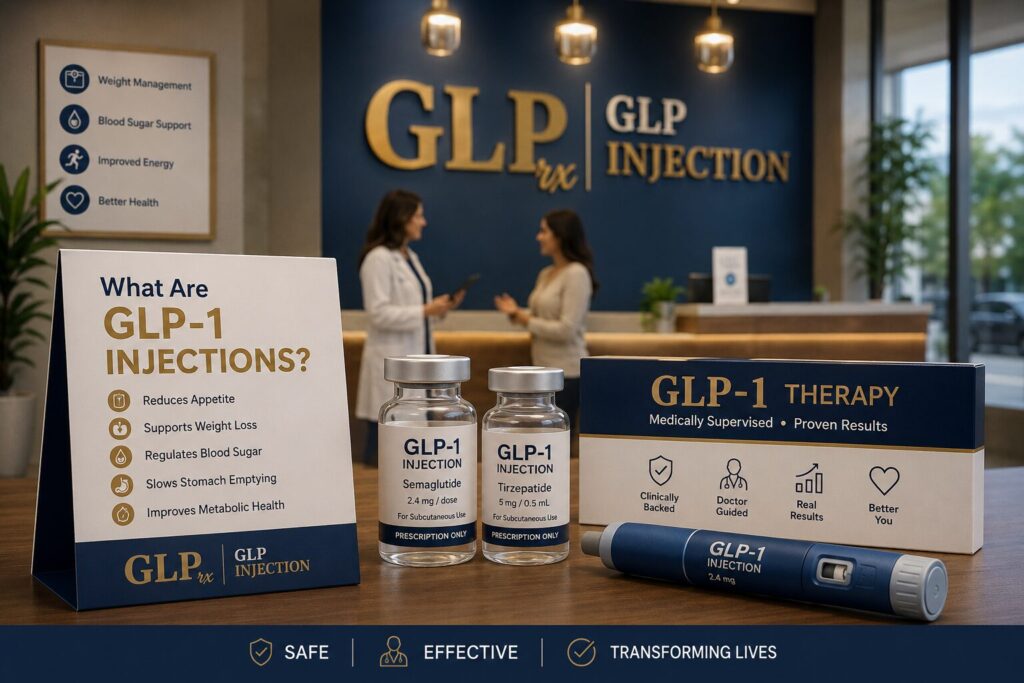
What Are GLP-1 Injections?
If you’ve been researching medical weight loss or type 2 diabetes treatments, you’ve likely come across GLP-1 injections. These prescription medications have gained significant attention because they help many people lose weight while also improving blood sugar control. But what exactly are GLP-1 injections, and how do they work?
In simple terms, GLP-1 injections are prescription medications that mimic a naturally occurring hormone in your body called glucagon-like peptide-1 (GLP-1). This hormone helps regulate appetite, slows digestion, improves insulin release, and helps maintain healthy blood sugar levels. By working with your body’s natural metabolic processes, GLP-1 medications can support sustainable weight management and diabetes care when combined with a healthy lifestyle.
Unlike fad diets or quick-fix weight loss products, GLP-1 injections are backed by extensive clinical research and are prescribed by healthcare providers based on a patient’s individual health needs. Many people choose these medications because they address one of the biggest challenges in weight management—persistent hunger and overeating.
In this guide, you’ll learn what GLP-1 injections are, how they work, their benefits, and why they’ve become an important treatment option for many adults in the United States.
Quick Answer
GLP-1 injections are prescription medications that imitate the body’s natural GLP-1 hormone to help regulate blood sugar, reduce appetite, slow stomach emptying, and support healthy weight loss. They are commonly prescribed for adults with type 2 diabetes and for eligible individuals seeking medically supervised weight management.
What Is GLP-1?
GLP-1 stands for Glucagon-Like Peptide-1, a hormone naturally produced in your intestines after you eat. Its primary role is to help your body process food efficiently while maintaining balanced blood sugar levels.
When food enters your digestive system, your body releases GLP-1 to communicate with multiple organs, including the brain, stomach, and pancreas. This coordinated response helps you feel satisfied after meals, prevents unnecessary overeating, and supports healthy glucose regulation.
Factors affecting appetite, blood sugar regulation, and how the body responds to metabolic signals can contribute to weight-management and blood-sugar challenges.
GLP-1 medications are designed to enhance this natural process by providing longer-lasting effects than the body’s own hormone.
How Do GLP-1 Injections Work?
GLP-1 injections work by supporting your body’s natural metabolic system in several important ways. Instead of focusing on just one mechanism, these medications influence multiple processes that affect appetite, digestion, insulin production, and blood sugar regulation.
They Reduce Appetite
One of the biggest reasons people struggle to lose weight is constant hunger.
GLP-1 medications communicate with appetite-control centers in the brain, helping reduce hunger signals. Many patients notice they feel satisfied with smaller portions and snack less frequently throughout the day.
Rather than forcing yourself to eat less, your body naturally begins to require less food.
They Slow Stomach Emptying
GLP-1 medications also slow the rate at which food leaves your stomach.
Because digestion occurs more gradually, you stay full longer after eating. This helps reduce between-meal hunger and can make it easier to avoid unnecessary snacking or overeating.
Feeling full for longer is one reason many people naturally consume fewer calories without feeling deprived.
They Help Regulate Blood Sugar
After eating, blood sugar levels naturally rise.
GLP-1 medications help your pancreas release insulin when it’s needed while reducing the amount of glucose released by the liver. Together, these actions help maintain healthier blood sugar levels throughout the day.
Importantly, these medications primarily work when blood sugar is elevated, making them an effective treatment option for many people with type 2 diabetes.
They Reduce Food Cravings
Many patients report fewer cravings for high-calorie, sugary, or processed foods.
Some people report reduced food cravings and less interest in overeating while taking these medications.
They Support Sustainable Weight Loss
Weight loss is often difficult because the body naturally increases hunger after calorie reduction.
GLP-1 medications help counteract this response by improving satiety, reducing appetite, and supporting consistent eating habits.
When combined with healthy nutrition, regular physical activity, and ongoing medical supervision, these medications may help individuals achieve gradual, sustainable weight loss rather than short-term results.
How Long Does It Take for GLP-1 Injections to Work?
Results vary from person to person.
Some individuals notice reduced appetite within the first few weeks, while meaningful weight loss typically develops over several months when combined with healthy lifestyle changes.
Factors that may influence results include:
- Starting weight
- Overall health
- Diet quality
- Physical activity
- Medication dosage
- Consistency with treatment
Your healthcare provider will monitor your progress and adjust your treatment plan when appropriate.
Benefits of GLP-1 Injections
GLP-1 injections offer several potential health benefits beyond weight loss alone. Because they work with multiple systems in the body, patients may experience improvements in overall metabolic health when treatment is combined with healthy lifestyle habits.
- Supports Healthy Weight Loss
Perhaps the most recognized benefit is medically supervised weight management.
By helping control appetite and reducing calorie intake naturally, many patients find it easier to lose weight without feeling constantly hungry.
- Improves Blood Sugar Management
For adults with type 2 diabetes, GLP-1 medications can help improve blood glucose control by supporting insulin production when needed and reducing excess glucose release from the liver.
Better blood sugar management may also reduce the risk of long-term diabetes-related complications.
- Helps Control Hunger
Constant hunger is one of the biggest barriers to successful weight management.
GLP-1 injections help many patients feel satisfied after smaller meals, making healthy eating patterns easier to maintain.
- Reduces Portion Sizes Naturally
Instead of relying on strict dieting, many patients naturally begin eating smaller portions because they feel full sooner.
This often leads to healthier eating habits without feeling deprived.
- Encourages Long-Term Lifestyle Changes
Medication alone isn’t the complete solution.
The greatest success often comes when GLP-1 treatment is combined with:
- Balanced nutrition
- Regular physical activity
- Quality sleep
- Stress management
- Ongoing medical guidance
Together, these habits can create sustainable improvements in overall health.
- May Improve Overall Metabolic Health
In addition to supporting weight loss and blood sugar control, improved metabolic health may positively influence other health markers for some patients, depending on their individual medical condition and treatment plan.
Your healthcare provider will determine whether GLP-1 therapy is appropriate based on your personal health history.
Why Are GLP-1 Injections Becoming So Popular?
The growing popularity of GLP-1 medications is driven by a combination of clinical research, patient outcomes, and increasing awareness of obesity as a chronic medical condition rather than simply a lifestyle issue.
Unlike approaches that focus primarily on calorie restriction and behavior change, GLP-1 medications target biological pathways involved in appetite, satiety, and glucose regulation.
As more healthcare providers incorporate GLP-1 therapies into personalized treatment plans, these medications have become an important option for adults seeking evidence-based support for weight management and type 2 diabetes.
Who Is a Good Candidate for GLP-1 Injections?
GLP-1 injections are not intended for everyone. These prescription medications should only be used under the guidance of a qualified healthcare provider who can evaluate your medical history, current health, and treatment goals.
You may be a good candidate for GLP-1 therapy if you:
- Have a Body Mass Index (BMI) of 30 or higher (obesity)
- Have a BMI of 27 or higher with a weight-related condition such as high blood pressure, type 2 diabetes, or obstructive sleep apnea
- Have type 2 diabetes and need additional support managing blood sugar
- Have struggled to lose weight through diet and exercise alone
- Are committed to making long-term lifestyle changes alongside medical treatment
Your healthcare provider will review your health history, medications, and treatment goals before recommending the most appropriate option.
Who Should Not Use GLP-1 Injections?
Although GLP-1 medications are safe and effective for many adults, they may not be suitable for everyone.
Your healthcare provider may recommend another treatment if you have certain medical conditions or risk factors.
GLP-1 injections may not be appropriate if you:
- Have a personal or family history of medullary thyroid carcinoma (MTC)
- Have Multiple Endocrine Neoplasia syndrome type 2 (MEN 2)
- Have experienced a serious allergic reaction to a GLP-1 medication
- Are pregnant or planning to become pregnant
- Are breastfeeding (unless advised by your healthcare provider)
- Have certain gastrointestinal disorders that may be worsened by slowed stomach emptying
Always discuss your complete medical history before beginning any prescription medication.
Common Types of GLP-1 Medications
Several GLP-1 receptor agonists are available in the United States. While they work in similar ways, each medication has different dosing schedules, approved uses, and clinical considerations.
Some commonly prescribed GLP-1 medications include:
| Medication | Common Use | Typical Dosing |
| Semaglutide | Weight management and type 2 diabetes | Weekly |
| Tirzepatide* | Weight management and type 2 diabetes | Weekly |
| Liraglutide | Weight management and type 2 diabetes | Daily |
| Dulaglutide | Type 2 diabetes | Weekly |
| Exenatide | Type 2 diabetes | Daily or weekly (depending on formulation) |
*Although tirzepatide is technically a dual GIP/GLP-1 receptor agonist rather than a pure GLP-1 medication, it is often discussed alongside GLP-1 therapies because of its similar clinical applications.
Your healthcare provider will recommend the medication that best aligns with your health goals, medical history, and insurance coverage.
GLP-1 Injections vs. Traditional Weight Loss Methods
Many people wonder how GLP-1 injections differ from conventional weight-loss approaches.
| Traditional Dieting | GLP-1 Therapy |
| Relies primarily on willpower | Helps regulate appetite biologically |
| Hunger often increases | Helps reduce hunger and cravings |
| Weight regain is common | Supports long-term lifestyle changes |
| Calorie restriction alone | Works alongside nutrition and exercise |
| Limited medical support | Ongoing healthcare supervision |
GLP-1 medications are not “magic shots.” They are tools that work best when combined with healthy habits and regular follow-up care.
Potential Side Effects of GLP-1 Injections
Like any prescription medication, GLP-1 injections may cause side effects. Fortunately, many are mild and improve as your body adjusts to treatment.
The most commonly reported side effects include:
- Nausea
- Vomiting
- Diarrhea
- Constipation
- Decreased appetite
- Stomach discomfort
- Bloating
- Fatigue
Many healthcare providers begin with a lower dose and gradually increase it to help minimize digestive side effects.
If symptoms become severe or persistent, contact your healthcare provider promptly.
Are GLP-1 Injections Safe?
Safety and suitability depend on the specific medication, dosage, medical history, and other medications you take.
Safety depends on several factors, including:
- Your medical history
- Existing health conditions
- Current medications
- Appropriate dosing
- Regular follow-up appointments
Never purchase GLP-1 medications from unverified online sources or use them without a prescription. Working with a licensed healthcare provider helps ensure that treatment is both safe and effective.
Tips for Getting the Best Results from GLP-1 Therapy
Medication is only one part of successful long-term weight management.
To maximize your results:
Eat Protein at Every Meal
Protein supports muscle maintenance and helps you stay full longer.
Stay Hydrated
Drinking enough water may help reduce digestive discomfort and support overall health.
Choose Nutrient-Dense Foods
Focus on:
- Lean proteins
- Vegetables
- Fruits
- Whole grains
- Healthy fats
Stay Physically Active
Aim for regular movement that fits your lifestyle, such as walking, strength training, cycling, or swimming.
Prioritize Sleep
Poor sleep can increase hunger hormones and make weight management more challenging.
Attend Follow-Up Visits
Regular appointments allow your healthcare provider to monitor progress, adjust treatment if necessary, and address any concerns.
Frequently Asked Questions
Are GLP-1 injections only for people with diabetes?
No. Some GLP-1 medications are approved for chronic weight management in adults who meet specific eligibility criteria, while others are approved to treat type 2 diabetes.
How often do I take GLP-1 injections?
It depends on the medication. Some are taken once daily, while others are administered once weekly. Your healthcare provider will prescribe the schedule that’s appropriate for you.
How quickly will I lose weight?
Results vary based on individual factors, including your starting weight, diet, physical activity, and adherence to treatment. Many people notice appetite changes within the first few weeks, while meaningful weight loss typically occurs gradually over several months.
Will I still need to diet and exercise?
Yes. GLP-1 medications work best when combined with healthy eating, regular physical activity, quality sleep, and long-term lifestyle changes.
Can GLP-1 injections cure obesity?
No. Obesity is considered a chronic medical condition. GLP-1 therapy helps manage weight but is not a permanent cure. Ongoing lifestyle habits remain essential for long-term success.
Do GLP-1 injections burn fat directly?
No. GLP-1 medications do not directly burn fat like a fat-burning drug. They primarily affect appetite, food intake, satiety, and glucose regulation, which can contribute to weight loss.
Can I stop taking GLP-1 injections once I reach my goal?
This decision should always be made with your healthcare provider. Some people may require long-term treatment, while others transition to lifestyle-based maintenance plans depending on their individual health needs.
Do I need a prescription?
Yes. GLP-1 injections are prescription medications and should only be used under the supervision of a licensed healthcare provider.
Key Takeaways
Before considering GLP-1 therapy, remember these important points:
- GLP-1 injections mimic a naturally occurring hormone that helps regulate appetite and blood sugar.
- They are commonly prescribed for adults with type 2 diabetes and eligible individuals seeking medically supervised weight management.
- Treatment works best when combined with healthy nutrition, physical activity, and ongoing medical care.
- Results vary from person to person, and consistency is key.
- Always consult a qualified healthcare provider to determine whether GLP-1 therapy is right for you.
Conclusion
GLP-1 injections have transformed the way healthcare providers approach weight management and type 2 diabetes by addressing the biological factors that influence hunger, satiety, and blood sugar regulation. Rather than relying solely on willpower or restrictive diets, these medications support the body’s natural metabolic processes, making it easier for many people to adopt healthier habits and achieve sustainable results.
GLP-1 therapy is generally used as part of a broader treatment plan that may include nutrition, physical activity, behavioral strategies, and regular medical follow-up.
At GLP Injection, we believe informed decisions lead to better health outcomes. Whether you’re exploring GLP-1 treatment for weight loss or type 2 diabetes, understanding how these medications work is the first step toward choosing the right path with your healthcare provider.